The Storage Bin Trap: When More Containers Make a Cupboard Harder to Use
The storage bin trap can make routine cupboard tasks harder. Match open shelves, trays and closed boxes to what you store, how you use it and what needs protection.
The most common storage bin trap is sorting a cupboard by container before asking what happens there. A row of boxes may look orderly, yet it can turn reaching for a tea bag, a screwdriver or a spare cloth into several extra actions. Choose an arrangement around the task and the conditions the contents face, rather than treating every untidy shelf as a request for another box.
Start with the cupboard’s task, not its appearance
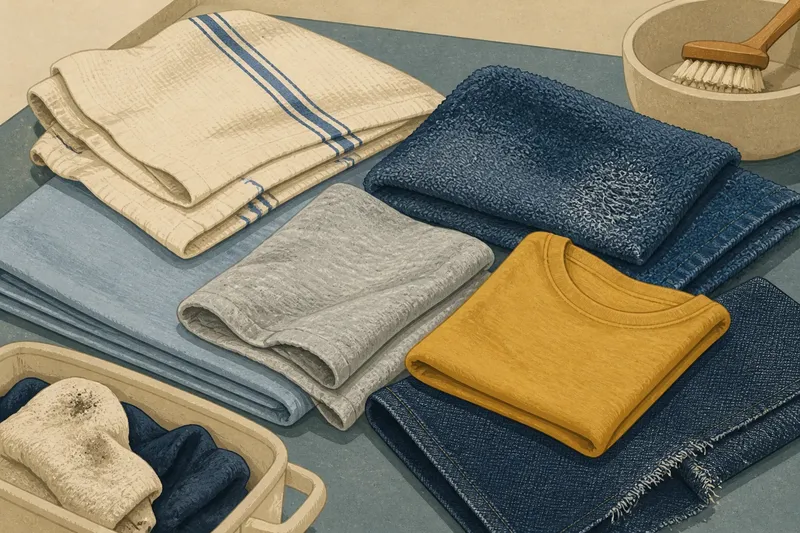
Take a cupboard beside a washing machine: it might hold detergent, stain-removal supplies and cloths used during laundry. Those things support one activity, but they do not necessarily need the same storage treatment. A cloth may be easiest to grab from a hook, while a small accessory that tends to wander may need a dish.
Before changing anything, notice what you reach for, what gets put back, and what causes a delay. The aim is to reduce a specific nuisance: searching, objects slipping behind one another, or dust settling on something that needs a clean surface. A container is useful when it addresses one of those conditions without creating a new obstacle.
Use boundaries to organise awkward shelf space
A shelf can be organised without enclosing its contents. A bookend, low tray or piece of card can mark where one group ends and another begins, while leaving the items visible and reachable. These boundaries are particularly useful when objects slide around or when a shelf serves more than one household task.
Try to match the boundary to the problem. A low-sided tray can stop small packets from drifting; a bookend can keep folded cloths upright; a plain shelf divider can separate spare stationery from manuals. If the contents are already stable and distinct, adding a boundary may simply take up room.
Reuse a sound container you already own before buying something new. A shallow baking tray or a sturdy cardboard box with its top removed may work for a dry, low-risk group. Do not repurpose a container if its former use, material or condition makes it unsuitable for the new contents.
Choose a closed box only when its barrier matters
A lid can keep dust, light or accidental splashes away from contents, and it can stop small pieces escaping when a box is moved. That protection can be worth the extra action of opening and closing it. But the box should solve a real storage problem, not merely conceal the sight of objects on a shelf.
Consider the material and the contents together. A cardboard box may be suitable for dry paper kept away from damp; a washable plastic container may be easier to clean where splashes are likely. For products with specific handling or storage instructions, follow the label and manufacturer guidance instead of relying on a general household rule.
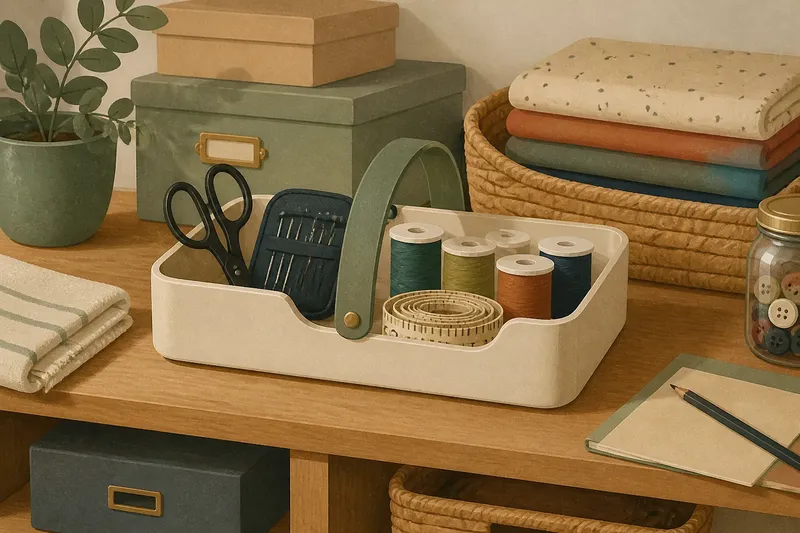
Where a box is necessary, make its purpose easy to understand. A label such as “spare sewing buttons” gives a clearer cue than “miscellaneous”. If a group changes often, use a label that can be replaced rather than writing a description that soon becomes misleading.
Which container suits the job?
Should I store frequently used items in a closed box?
Do so when the contents need protection or would otherwise spill, scatter or become contaminated. If neither applies, try keeping the items in view so the routine does not begin with opening a lid.
How do I organise small parts without losing them?
Use a shallow dish or tray when the parts belong together and can be retrieved without digging. If they need to stay separated, choose a divided box and label the sections clearly.
When should I remove a storage container?
Remove or change it if you regularly lift it to reach other things, cannot tell what it holds, or struggle to return items to it. Try a shelf boundary or a smaller, task-specific group and see whether the obstruction disappears.
Work through a cupboard change before buying anything
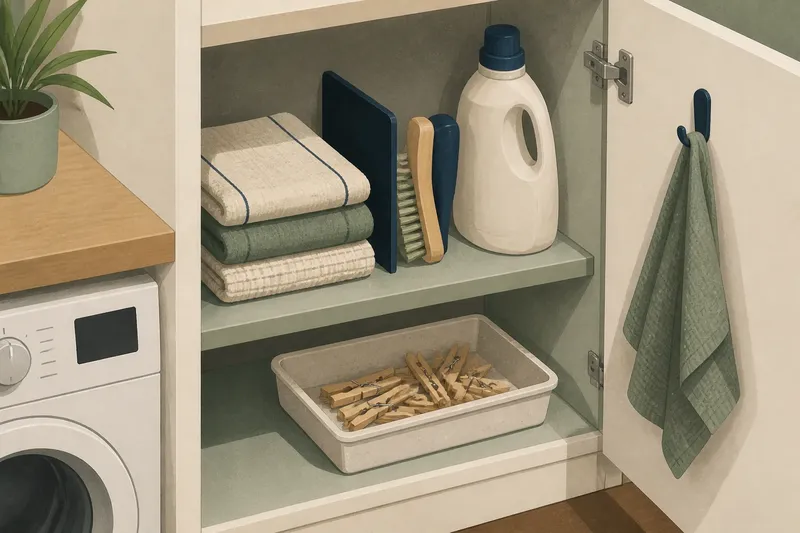
Say you are organising an imagined cupboard with a packet of spare cloths, a brush, a small bottle of detergent and loose pegs. The cloths are used often, the brush belongs to laundry, the detergent needs to follow its label, and the pegs tend to scatter. First, leave the cloths folded at the front and stand the brush beside them; next, put the detergent where its instructions and the cupboard conditions permit; then place the pegs in an existing shallow dish.
The resulting arrangement keeps the routine items easy to pick up, gives the pegs a boundary and reserves a closed container only if the detergent’s guidance or the cupboard’s conditions call for one. If the dish blocks the brush or the pegs still spill, move the dish or use a container with higher sides. The decision follows from what happens on the shelf, not from a desire to make every group match.
Check the shelf before committing to a container
- Check whether the item is used as part of the same task as its neighbours; if it is, group it there, but if not, give it a separate place.
- Check whether small pieces scatter during ordinary use; if they do, use a dish or divided box, but if they stay put, leave them accessible without added containment.
- Check whether dust, damp or splashes are a concern for the contents; if they are, choose a suitable barrier and follow any product instructions, but if they are not, avoid a lid that adds an unnecessary step.
- Check whether you can identify contents without opening the container; if you cannot, add a clear, changeable label or choose a more visible arrangement.
- Check whether the container blocks access to another item; if it does, reposition or remove it, but if it leaves the route clear, keep it if it serves a purpose.
- Check whether an existing tray, dish or box is sound and suitable for the contents; if it is, reuse it, but if its material or condition is unsuitable, choose another safe option.
The storage bin trap is less about owning too many boxes than assigning them work they do not need to do. For a cupboard that supports a daily task, begin with the items and the route your hand takes, then add only the boundary or barrier that resolves a real problem. A shelf is working well when putting things away is as straightforward as taking them out.