A Seasonal Wardrobe Change Without Buying Organisers
A seasonal wardrobe change without buying organisers helps you sort by actual use, set aside repairs and reuse bags or boxes already at home.
The most common mistake in a seasonal wardrobe change is moving every out-of-season garment into storage before asking whether it still earns its place. That costs space, makes the next change harder and can leave useful clothes buried beneath items you no longer wear. A seasonal wardrobe change without buying organisers starts with use, not with a shopping list.
Give the change a week rather than trying to empty the whole wardrobe in one go. You will have time to notice what you reach for, identify repairs, and find suitable bags or boxes already at home. The aim is a wardrobe that reflects your real routine, with stored clothes easy to retrieve when the weather turns.
Notice what you wear before moving anything
For a few days before the change, pay attention to the clothes you choose and the conditions that prompted each choice. A light jumper may be useful on cool mornings even when the afternoon is warm; a waterproof coat may stay in regular use throughout the year. Seasonal clothing is not always neatly divided by calendar.
Keep a note on your phone or a scrap of paper, recording garments you wear and items you look for but cannot find. You do not need to record every outfit. A short list of frequently used pieces and genuine gaps is enough to stop you packing away something you still rely on.
Say you usually wear a wool cardigan on chilly mornings, while a thick festive jumper stays untouched after its season. Keep the cardigan within reach and set the jumper aside to consider. The useful distinction is not simply “warm” and “cold” clothing; it is whether each garment fits your actual days.
Use the first day to prepare a small work area
Choose a clear bed or table where you can sort a manageable group without scattering clothes across the room. Gather a laundry basket, a few reusable bags, any clean cardboard boxes you already have, and a note for repairs. Avoid emptying every drawer at once: a smaller working area makes it easier to finish and return clothes to order.
Check that any bag or box you might reuse is clean, dry and free of strong smells. A cotton tote, a spare pillowcase or a sturdy box can hold clothing if it is suitable for the room and the garments. Keep the items you wear in between seasons—such as a raincoat or light layers—outside the storage group.
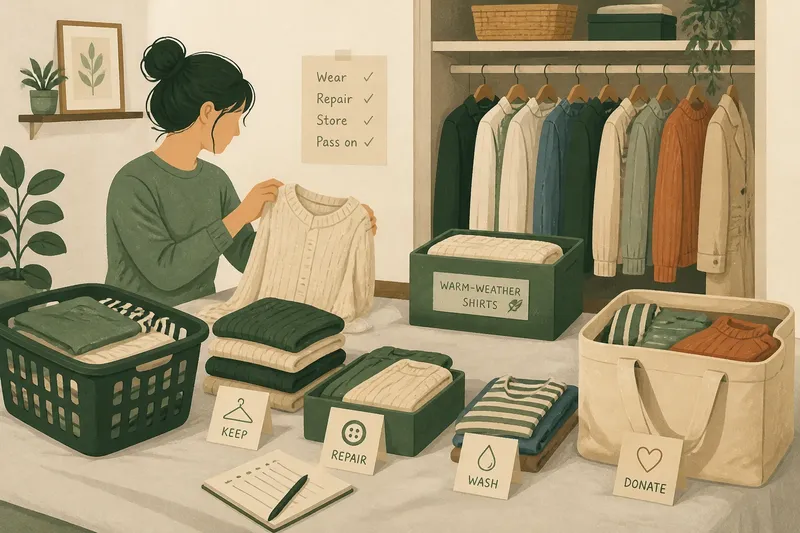
Set a clear destination for each decision: back in the wardrobe, ready for washing, awaiting repair, or ready to leave your home. These are sorting destinations, not new storage systems. If a garment’s care label or a material’s needs affect how it should be stored, follow the label or manufacturer’s instructions.
Sort by use and condition on the second day
Work through one section at a time, such as shirts, knitwear or coats. Handle each garment and ask whether you wore it recently, expect to wear it in the coming season, and can use it comfortably as it is. A “maybe” does not need an immediate verdict; keep a small, visible group for a later decision rather than mixing it back into the main pile.
Make a separate repair group for clothes with a loose button, an open seam, a broken zip or a hem that needs attention. Note the repair beside the item, either on a slip of paper placed with it or in a phone reminder. This makes the next action specific instead of leaving a vague promise to “fix it sometime”.
Clothing that is clean and wearable but no longer suits your needs can be set aside for an appropriate local donation, swap or textile collection. Keep stained or damaged items separate, since not every collection accepts them. If you are unsure, check the recipient’s rules before passing anything on.
Keep useful overlaps within easy reach
Some clothes serve more than one season. A thin merino layer, a sun hat, a warm scarf or a waterproof shell may be useful across changing weather, so do not pack something away simply because it belongs to the season that is ending. Keep these bridging pieces where you can reach them without unpacking the whole rotation.
Think about your own week as well as the forecast. Someone who cycles to work, spends time outdoors or works in a cool room may need a different set of accessible layers from someone whose days are mostly indoors. The point is to preserve the clothes that support your routine, not to follow a standard seasonal list.
Choose a home for stored clothes on the third day
Use what is already available, and choose a place that is dry, reasonably clean and easy to revisit. A clean pillowcase can keep a small group together on a shelf; a sound cardboard box can hold folded items in a cupboard. A reusable bag can be convenient for a light, short-term group, while a box may be easier to stack if the storage spot allows it.
Do not overfill a container or make a bundle so heavy that you will avoid retrieving it. Leave space for the clothes to sit without being crushed, and keep stored items away from damp floors or places where they could be forgotten behind other belongings. If the available bags and boxes do not suit a garment, use a shelf or drawer rather than forcing the item into an unsuitable container.
Add a plain label that names the contents and the season, such as “warm-weather shirts”. A note on the outside of a bag or box saves you from opening several containers later. Keep labels simple and honest; if the contents change, update the note rather than relying on memory.
Make the next actions visible on the fourth day
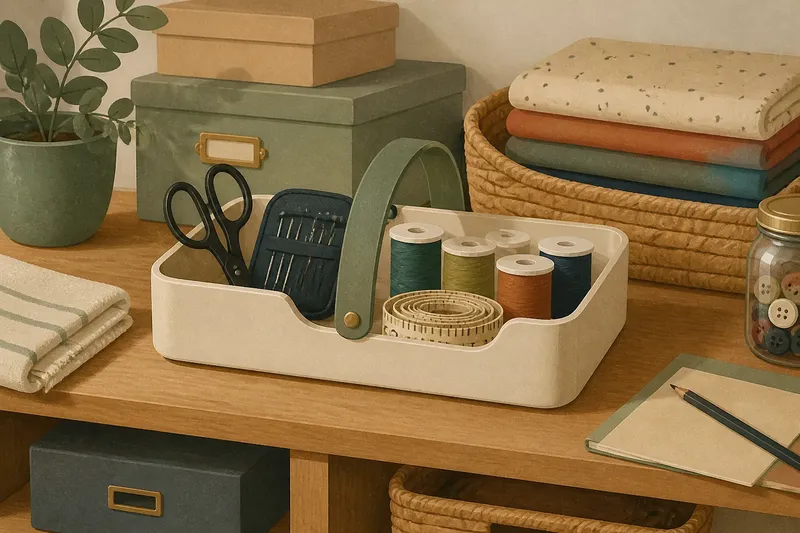
Take the repair group and decide what you can realistically deal with yourself and what needs help. A loose button may be a straightforward hand-sewing task if you already have a needle, thread and the confidence to use them. A damaged zip or complex alteration may call for a local tailor or repair service instead.
Put a chosen repair where it will prompt action, such as beside your sewing tin or in a bag you take to the tailor. For anything you are not ready to repair, set a date to reconsider it rather than returning it unnoticed to the wardrobe. If the garment is no longer wanted, decide on a suitable route out instead of letting the repair pile become permanent storage.
Imagine you find two shirts with loose buttons while sorting. You place them with your sewing tin, write “replace buttons” on a note, and plan to mend them during a quiet evening; afterwards, the expected visible result is two wearable shirts back in the wardrobe. If one shirt also has a torn seam you cannot mend confidently, separate it for a repair service rather than treating both items as the same task.
Check the rotation at the end of the week
Once the stored clothes are put away, look over the active wardrobe and confirm that daily items, useful layers and the repair group have distinct places. You should be able to find what you wear without shifting a stack of clothes that belong to another season. If a stored bag is hard to reach, move it to a more accessible spot rather than buying another container.
Write down any item you repeatedly searched for during the week. It may be misplaced, in need of repair or absent from your wardrobe, and those are different problems. Check the rest of the rotation before deciding to buy a replacement; the garment may already be stored in a bag or box you labelled too broadly.
What should stay in the wardrobe between seasons?
Should I store clothes I might need on a cool day?
Keep versatile layers and weather protection accessible if you use them across the year. Store only the pieces that are unlikely to serve your routine before the next seasonal change.
How do I choose between a bag and a box?
Use a clean, dry option that suits the garment, storage place and weight you can handle. A bag can keep a small group together, while a box can make contents easier to stack and label; neither is useful if it is damp, damaged or difficult to reach.
What should I do with clothes I have not worn?
Consider why they stayed unused: the season may not have suited them, or fit, comfort or condition may be the obstacle. If you do not expect to wear them and they are in good condition, consider a suitable local donation or swap; separate damaged textiles and check local collection guidance.
When should I buy a replacement garment?
First check whether a similar item is already in your stored clothes and whether a repair would make an existing garment usable. If there is still a genuine gap, choose a garment for the conditions and activities you have identified rather than buying for a hypothetical occasion.
Let use guide the next seasonal change
Keep your brief notes until the next rotation: what you wore, what you missed, and which repairs you completed or postponed. That record turns a seasonal wardrobe change without buying organisers into a practical routine, not a reason to purchase storage gear. When the next season arrives, begin with those observations and adjust only what your actual use calls for.
Before putting the final bag or box away, leave its label facing out and keep the repair reminder somewhere you will see it. Those small choices make the next useful action easier: finding a layer, finishing a mend or deciding that an item can leave your wardrobe.